Sleep Masks & Light Cues
Cueing is an active research question. Judge a mask by its exact sensing and cue behavior, comfort, and sleep cost rather than by a promise of lucidity.
Review category
Compare sleep trackers, cueing masks, and headbands by what they measure, how well they are validated, and whether the tool protects your sleep.
Find your focus
Cueing is an active research question. Judge a mask by its exact sensing and cue behavior, comfort, and sleep cost rather than by a promise of lucidity.
A headband may estimate sleep-related signals, but a consumer label does not make a sleep-stage chart a clinical measurement.
Wearables can help with longitudinal patterns, while accuracy varies by device, metric, population, and night.
Treat stimulation and therapeutic-sounding claims as a higher-scrutiny decision that needs exact authorization and professional context.
Tools for your practice
Sleep Technology
Compare top smart pillows for achieving dream awareness faster - hands-on tests show which cue types, sensors, and settings boost recall and lucidity.
Sleep Technology
Compare top wearable neurofeedback devices to boost intentional dreaming, with research-backed reviews on EEG cues, gentle stimulation, REM timing, and dream recall.
Sleep Technology
Compare bed sensors that boost dream awareness: map REM cycles, log movement/HR, and deliver subtle audio/vibe cues to improve recall for beginners & pros.
Sleep Technology
Research-backed reviews of EEG headbands that deliver timed light, sound, and vibration cues to raise dream awareness, optimize REM timing, and improve recall.
Start with the output, not the product category. A tracker that shows a trend, a mask that attempts a timed cue, and a headband that estimates a sleep stage are different tools with different failure modes. FDA’s 2026 general-wellness guidance distinguishes lifestyle trends from claims to diagnose, monitor, or manage a disease. A consumer dashboard should not quietly become a clinical instrument in your decision.
Sources: S5
Before buying, write the one decision the device should improve: noticing a rough schedule, experimenting with a cue, or learning whether the hardware is comfortable enough to wear. If the answer is “tell me exactly how much REM I had,” the category is already being asked for more precision than many consumer devices have established. Check the exact model’s instructions and support terms.
A 2025 meta-analysis covered 24 studies and 798 people using consumer wrist devices. Compared with polysomnography, the devices differed on total sleep time, sleep efficiency, sleep latency, and wake after sleep onset. The authors said the devices may still help track general sleep patterns, but their key parameters were not as reliable as polysomnography.
Sources: S1
One 2024 inpatient study compared three named commercial wearables with PSG in 35 healthy adults aged 20–50 over one night. Sleep-versus-wake sensitivity was at least 95% for all three in that sample, while stage sensitivity varied from 50% to 86% by device and stage. Those numbers describe that sample and those models; they are not a promise about every watch, ring, headband, or night.
Sources: S2
Use a dashboard as a prompt for a longer conversation with your own routine, not as a diagnosis or a reason to change medical care. Compare the same device with your own sleep notes over time, keep uncertainty visible, and do not treat a single REM or deep-sleep estimate as ground truth.
Sensory cues can be incorporated into dream experiences in some research, but a 2024 systematic review of 51 publications found wide variation in methods, definitions, and reported stimulus-dependent dream changes, from 0 to about 80%. That range is a description of heterogeneous research, not a consumer success rate.
Sources: S3
A separate systematic review of lucid-dream induction research identified MILD as the strongest signal in its set of studies and called for further replication. A mask, light cue, vibration, or EEG label therefore belongs in the “interesting mechanism to evaluate” column unless the exact device has credible validation for the exact outcome. No cueing tool can be promised to reliably make every user lucid.
Sources: S4
Read the instructions for comfort, fit, charging, cue controls, and what the device does when it misses or misclassifies sleep. Keep the first trial reversible and stop if the cue wakes you, leaves you uncomfortable, or makes the next day worse. Do not copy a research stimulation setting into a consumer routine.
Sources: S7
Sleep tracking can become counterproductive when an imperfect estimate turns into a score to optimize. In a 2024 cross-sectional study of 523 people, an algorithm-based estimate of orthosomnia varied with the cutoff used; the study found higher sleep-preoccupation scores among wearable users but could not show that the devices caused the concern.
Sources: S6
Set a stop rule before you wear the device: if checking increases worry, leads to repeated adjustments, fragments sleep, or makes you distrust how you feel despite a good night, remove the dashboard or pause the device. FDA home-use guidance also makes the ordinary details part of the decision: power, labeling, proper use, and support matter.
Choose one output, one reversible trial, and one reason to stop. If the device cannot answer the first question without asking you to sacrifice sleep or treat an estimate as a diagnosis, return to the published review archive and GLD’s How We Choose and Disclosure pages.
A device captures one or more raw sensor signals; software may derive features and generate a sleep-stage, score, or event estimate. The chart is an output, not a direct window into every underlying event. Ask what is sensed and what is inferred. The pipeline is device-specific: a tracker, cueing mask, headband, or bedside sensor may not use the same inputs or algorithm.
Use “validated” only with its context: the exact device and software versions, validation population, reference method, metric, and use case. Ask whether raw data are available and known failure modes are described. Verification asks whether a captured parameter is measured accurately; validation asks whether the technology assesses the intended event or characteristic in the proposed population. Missing disclosure limits independent review; it does not prove poor performance.
Count the full loop before you buy: fit, care, setup, charging, connectivity, missing-data handling, and help when something fails. Charging gaps, software updates, and support can interrupt planned capture; record missing nights and software-version changes as context for interpreting the trial. Exact fit, battery behavior, return windows, and support vary by model, software version, seller, and jurisdiction.
Privacy belongs in the same cost calculation. In the U.S., data in a personal health app may not be protected by HIPAA. Coverage depends on whether the app is provided by a covered entity or business associate and on the relevant data flow. Review current terms for collection, permissions, sharing, retention, deletion, and export. State laws and service terms vary; this is not legal advice. HHS’s cited page does not analyze smartwatches or fitness trackers. App privacy terms and hardware behavior are separate questions.
Treat this as a non-clinical personal observation, not a diagnostic or treatment test. Write one question first: a trend, comfort, cue fit, dream recall, or another defined practice decision. If cue fit is the question, limit it to comfort, continuity, or whether the device delivered the intended recorded event. Note a minimal baseline using only what that question needs. Then use a similarly bounded device block with consistent notes about whether it was worn, charged, connected, comfortable, and any next-day cost. Review the block at the end rather than after every night.
There is no universal trial duration or success threshold. Use the question to set a bounded observation block, not a promise of efficacy. Do not treat one night as proof of device accuracy, a personal sleep pattern, or a dream-practice effect; a single night can be atypical even with a reference measurement. Write the stop, pause, or return rule before reviewing results. Pause, return, or uninstall only where current model and service terms allow.
If wearing the device causes pain, skin irritation, heat, numbness, or another physical problem, stop wearing it and follow the model’s instructions or support process. Keep the observation personal and non-clinical.
Define “enough” as decision sufficiency, not proof that every displayed metric is true. Repeated, interpretable observations are enough for a narrow personal decision when they answer the prewritten question and could change the action. Do not use a dashboard alone to answer a clinical or diagnostic question.
Stop checking when additional dashboard views will not change the decision. Keep the smallest summary the decision requires, and treat missing nights, software-version changes, and unclear outputs as context rather than filling gaps with assumptions. If the burden or privacy cost no longer justifies the information, pause or stop. Keep, export, delete, or disable collection only as the service’s current settings and terms allow. If more data cannot change what you will do, end the observation block.
This is a GLD evidence-aware buying guide, not a medical-device evaluation, sleep diagnosis, or lucid-dream guarantee. It uses current FDA scope and home-use guidance, two consumer-device validation studies, a sensory-stimulation systematic review, a lucid-induction systematic review, and a cross-sectional sleep-preoccupation study. GLD did not test a device or claim first-hand results.
These sources provide context for the information on this page. They cannot replace medical advice or tell you whether a supplement is safe for you.
Usually, treat a consumer dashboard as an estimate or trend, not a stand-alone diagnosis. Intended use and authorization are product-specific; do not treat a sleep-stage chart as clinical measurement.
No. Sensory-cue research is heterogeneous, and lucid-induction reviews still call for replication. A commercial device’s marketing claim is not validation for every user.
Pause or simplify it. If checking creates worry, repeated adjustments, or fragmented sleep, the tool is failing your practice goal even if its dashboard looks precise.
A tracker captures sensor signals; software may derive features and generate labels or estimates. Ask what is sensed, what is inferred, and which exact device and software version was validated with which population and reference method. Do not treat a stage chart as a direct measurement without documentation for that method.
Count fit, care, setup, charging, connection, missing-data handling, support and returns, and the app’s collection, permissions, sharing, retention, deletion, and export terms. Exact costs and controls depend on the current device, seller, service terms, software version, and jurisdiction.
There is no universal number. Set one personal question, record a small baseline, and use a bounded observation block with consistent notes. Do not treat one night as proof; prewrite the stop, pause, or return rule and use pause, return, or uninstall only where current model and service terms allow.
Stop when the question is answered and more views will not change the action, or sooner when the burden or privacy cost meets your prewritten rule. Keep, export, delete, or disable collection only as the service’s current settings and terms allow.
Category guides
Blog
JournalStruggling with loft noise? This guide covers sound masking and acoustic zoning tactics to quiet your space, protect REM sleep, and sharpen dream recall.
Blog
JournalUse light, sound, temperature, and simple room cues to support comfortable sleep and observe dream recall without treating decor as a lucid-dream guarantee.

Blog
JournalThere is no universal best time to lucid dream. Compare WBTB, a planned nap, or no alarm by how each fits the sleep you have, then log recall and treat REM estimates as clues.
The review collection
6 reviews
Sleep Technology
ReviewCompare top smart pillows for achieving dream awareness faster - hands-on tests show which cue types, sensors, and settings boost recall and lucidity.
Continue exploring
Sleep Technology
Compare top wearable neurofeedback devices to boost intentional dreaming, with research-backed reviews on EEG cues, gentle stimulation, REM timing, and dream recall.
Sleep Technology
Compare bed sensors that boost dream awareness: map REM cycles, log movement/HR, and deliver subtle audio/vibe cues to improve recall for beginners & pros.
Sleep Technology
ReviewResearch-backed reviews of EEG headbands that deliver timed light, sound, and vibration cues to raise dream awareness, optimize REM timing, and improve recall.
Sleep Technology
ReviewCompare sleep-tracking rings for achieving conscious dreaming faster: learn how REM alarms, vibration cues, and sleep analytics improve recall and cue timing.
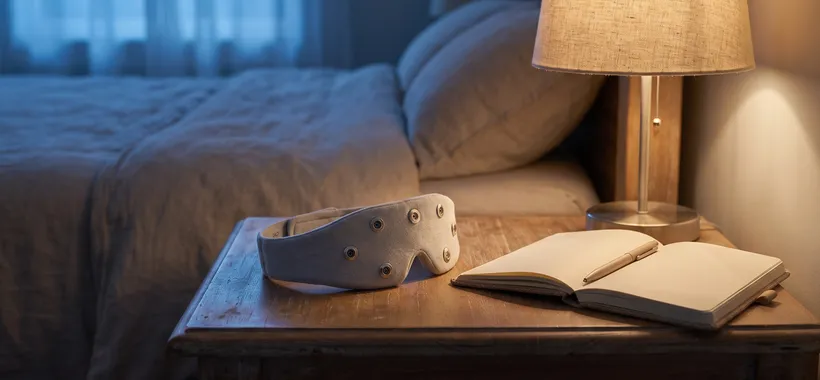
Sleep Technology
ReviewConsumer EEG headbands for REM detection and dream work, compared: overnight EEG sleep tracking, daytime awareness training, and what REM-timed wake-ups can and cannot do inside the dream.
Leave another page open