Binaural Beats
A frequency label is not an outcome study. Match any audio claim to the exact intervention and goal before treating it as evidence.
Review category
Compare binaural beats, guided audio, and sleep headphones by purpose, evidence, listening comfort, and their effect on sleep continuity.
Find your focus
A frequency label is not an outcome study. Match any audio claim to the exact intervention and goal before treating it as evidence.
Guided content is an instruction and attention tool; judge it by clarity, fit, and whether it helps you settle rather than by a guaranteed state change.
Sources: S3
Audio intended for sleep cues has a different burden from daytime instruction. Check whether it preserves sleep instead of assuming more cues are better.
Comfort, fit, volume control, and reversibility matter as much as the track. Exact headphone claims belong to verified reviews.
Tools for your practice
Audio & Binaural Beats
Amplify your dream recall with ASMR induction loops that blend whispers and theta binaurals for conscious entry, REM optimization, and stronger dream memory.
Audio & Binaural Beats
Hands-on tests reveal which WBTB-timed isochronic tone kits most reliably entrain REM, strengthen dream recall, and sustain awareness through REM transitions.
Audio & Binaural Beats
A comparison of four verbal-cue binaural recordings for lucid dreaming practice: two guided hypnosis MP3 downloads from their makers and two alternative CDs, plus audition, stereo and placement guidance that keeps playback results separate from dream results.
Audio & Binaural Beats
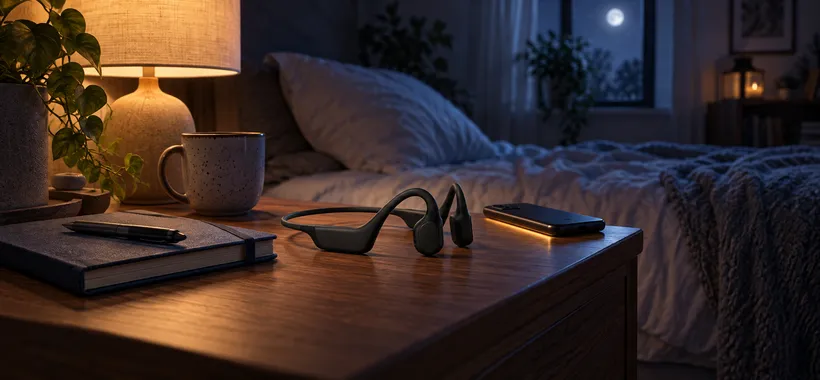
Compare four bone-conduction headphones for lucid dreaming by frame, stated runtime, charging, and active-use fit. Check room suitability, routing, pillow contact, and safe listening during awake playback.
Name the job first: instruction while awake, background sound that masks a distraction, or a cue intended to be noticed during sleep. These jobs have different tradeoffs. A guided session depends on content and attention; a masking track depends on whether it helps ignore a sound; a sleep cue depends on timing and whether it wakes you. No job becomes proven because a track uses “theta” or “gamma” in its title.
In a double-blind sham-controlled trial, 43 people with subclinical insomnia completed two weeks of 30-minute pre-sleep listening. Theta binaural-beat music did not significantly outperform music-only on the Insomnia Severity Index. That is a small sleep-outcome trial, not a lucid-dream test and not evidence against every person finding audio relaxing.
Sources: S1
Match evidence to the intervention. A systematic review of auditory stimulation and sleep included white noise, pink noise, and multiaudio studies but excluded binaural tones. Its results cannot be quoted as binaural-beat evidence.
Sources: S2
Dream-cue research is broader but not simpler. A 2024 review of 51 sensory-stimulation publications found varied methods, definitions, and reported stimulus-dependent dream changes. A lucid-dream induction review identified MILD as the strongest signal in its set and called for further replication. Treat audio as an experiment in fit and routine, not a reliable lucidity switch.
In one controlled REM sleep-laboratory protocol, repeated low-intensity tones were associated with EEG arousal and fewer visual imagery reports on awakening. That shows why “quiet enough to hear” is not the same as “neutral to sleep”; it does not tell you to reproduce the lab setting at home.
Sources: S5
WHO safe-listening guidance treats sound level and duration together. Keep audio as low as practical, limit exposure, and treat pain, ringing, or discomfort as a reason to stop and reassess. This page does not prescribe a personal decibel limit or frequency.
Before buying, decide whether you need offline playback, a short session, a timer, a sleep-friendly fit, or the ability to stop without reaching for a screen. Compare comfort, masking, content length, privacy, repeatability, and return terms in the exact review. These criteria remain useful when evidence for the dream outcome is uncertain.
Start with one change and record only what matters: did you fall asleep, did the audio wake you, did you remember more or less, and how did the next day feel? If playback wakes you, creates discomfort or ringing, or worsens next-day sleep, stop or simplify it.
Choose a job, choose the quietest reversible format that meets it, and stop treating the frequency label as the result. Route to the GLD review archive, How We Choose, and Disclosure for the next evidence and disclosure boundary.
When sleep audio or binaural beats feel helpful, name what changed before deciding why. Relaxation is how settled or comfortable you felt while listening. Sleep is how the night felt and how you felt the next day. Recall is the dream content you remembered. Lucid awareness means knowing you are dreaming while the dream is happening. These are separate observations: a calm listening session does not establish better sleep, better sleep does not establish more recall, and more recall does not establish lucidity. A vivid, unusual, emotional, or well-remembered dream may still be non-lucid. Use notes that match the question you want answered, and leave an unexplained change unexplained.
Treat playback as a delivery check, not a dream result. Where your player or device exposes it, check the selected item, output route, confirmed start, forward progress, interruptions or stalls, and final stop/end state. Do this when convenient; it is not a reason to keep a screen on or monitor the device during sleep. If that history is unavailable or incomplete, mark delivery as unknown rather than treating it as a dream or sleep result.
On some devices or apps, route changes or loss of audio focus may pause, fade, duck, mute, or reroute audio. Behavior depends on the device, operating-system version, app, and output route. A player or route record shows what the system reported, not whether a sleeping person heard every moment or whether playback changed a dream.
A headphone route, speaker route, or playback mode can change more than the audio itself: room acoustics, comfort, privacy, and interruption risk may all shift. Treat each as a different delivery condition. A different listening experience is an observation, not a reason to rank headphones above speakers or speakers above headphones for sleep or dreaming.
Change one delivery condition at a time and keep the content, setting, notes, and outcome question stable. Record route reliability, comfort, privacy, and sleep tradeoffs separately from recall or lucidity. If changing the route also changes several environmental features, call it a broader setup comparison. Keep listening as low as practical and limited, and stop or simplify if pain, ringing, discomfort, audio that wakes you, or worse next-day sleep crosses the existing guardrails.
Night-to-night variation can make a new setup look necessary after one vivid dream or poor morning. Set the question and stop rule before you begin, keep the core routine and note fields steady, and review the completed block instead of changing the setup nightly. Separate confirmed, interrupted, and unknown delivery from sleep cost, recall, and lucid awareness.
Keep the capture method consistent when comparing observations; methods that add awakenings can affect sleep, so do not compare nights with and without those interruptions as if they were equivalent. A cleaner comparison can make notes easier to interpret, but this remains observational and does not show that audio caused an outcome. One memorable dream is a data point, not proof of a repeatable effect. If audio causes pain, ringing, discomfort, wakes you, or worsens next-day sleep, stopping or simplifying takes priority over finishing a comparison.
This is an evidence-aware audio guide, not hearing or sleep medical advice and not a lucid-dream guarantee. It uses a small binaural-beat trial, an auditory-sleep review that excluded binaural tones, sensory-stimulation and lucid-induction reviews, a controlled REM auditory study, and WHO safe-listening guidance. GLD did not test tracks, headphones, or listening settings and does not claim first-hand results.
These sources provide context for the information on this page. They cannot replace medical advice or tell you whether a supplement is safe for you.
No. A frequency label is not an outcome study, and lucid-dream induction reviews still describe replication limits.
No. More sound is not proof of efficacy and can add sleep or hearing burden. Keep listening low and limited, and do not copy a lab setting.
Stop or simplify it. Discomfort, ringing, or worse next-day sleep means playback is failing the practice goal.
Record four separate observations: how settled you felt while listening, how sleep felt and how the next day went, what dream content you recalled, and whether you knew you were dreaming while it happened. A pleasant session, vivid dream, or change in recall cannot by itself establish lucidity or show that audio caused the change.
Where your player or device exposes it, check the selected item, output route, confirmed start, forward progress, interruptions or stalls, and final stop/end state. If the history is unavailable or incomplete, mark delivery as unknown rather than treating it as an outcome.
Yes, as a delivery comparison. Change one delivery condition at a time and keep the content, setting, notes, and outcome question stable. Record room, comfort, privacy, and route reliability as tradeoffs. Headphones and speakers are not automatically equivalent, but a different experience does not show that either is more effective for sleep or dreams.
No. Define the question and stop rule first, keep the core routine and notes steady, and review the completed block. Separate delivery uncertainty and sleep cost from recall and lucidity. Do not change everything because of one night; stop or simplify when the existing hearing or sleep guardrails are crossed.
Category guides
Blog
JournalUse light, sound, temperature, and simple room cues to support comfortable sleep and observe dream recall without treating decor as a lucid-dream guarantee.
The review collection
4 reviews
Audio & Binaural Beats
ReviewAmplify your dream recall with ASMR induction loops that blend whispers and theta binaurals for conscious entry, REM optimization, and stronger dream memory.
Continue exploring
Audio & Binaural Beats
Hands-on tests reveal which WBTB-timed isochronic tone kits most reliably entrain REM, strengthen dream recall, and sustain awareness through REM transitions.
Audio & Binaural Beats
A comparison of four verbal-cue binaural recordings for lucid dreaming practice: two guided hypnosis MP3 downloads from their makers and two alternative CDs, plus audition, stereo and placement guidance that keeps playback results separate from dream results.
Audio & Binaural Beats
ReviewCompare four bone-conduction headphones for lucid dreaming by frame, stated runtime, charging, and active-use fit. Check room suitability, routing, pillow contact, and safe listening during awake playback.
Leave another page open