Hypnagogic Light Projectors That Prime Lucid Dreaming
Published on December 6, 2025
Curious how a few carefully timed flashes of light can nudge your sleep toward dream exploration? I spent years chasing that exact nudge, trying lamps, masks, and projectors until I learned which signals actually help you slide from waking into the hypnagogic edge without yanking you fully awake. This guide walks through how gentle pre-REM stimulation, subtle hypnagogic cues, and strategic light-based phase-shifting can boost recall, sharpen conscious access, and make conscious entries into dreams more consistent.
You’ll get hands-on, experience-first advice on what to look for in real devices, how to use them for WBTB, naps, or nightly phase shifts, and what steady practice looks like when the tech genuinely helps. I’ll point out comfort issues, over-hyped features to skip, and the specific controls that matter when you want priming instead of interruption. If your goal is gear that fits into your routine and produces repeatable results, read on.
Our Top Pick
As someone who practices dream exploration, I want tools that change how my pre-sleep time feels, not just add another gadget to the nightstand. The Rossetta Mini 3D Galaxy Projector does that. Its soft, evolving scenes and built-in timers make it easy to deliver gentle pre-REM cues during WBTB, naps, or phase-shifted nights. After months of on-and-off use it sharpened my hypnagogic awareness and improved dream recall when I paired it with a consistent timing protocol. The Bluetooth speaker and remote mean I can set it up and drift back to sleep without fiddling. It’s small and travel-friendly, so I can use it at home or tweak REM timing while on the road.
It’s not magical. You’ll need to experiment with placement, brightness, and timing to find your sweet spot. The speaker handles cues and ambient tracks but don’t expect a premium soundstage. Still, for the price and the real-world results I got, this projector is one of the easiest, most repeatable ways to bias the shift into conscious dream states. Use it alongside journaling and clear intent-setting. With steady use, the awareness gains stack up and your chances of an aware entry improve.
For dream exploration induction the right light at the right time beats random gadgetry. This projector gives you control, portability, and a wide range of subtle visuals to tune your hypnagogic state.
Key benefits and standout features:
- Pre-REM priming. Timed light patterns increase hypnagogic awareness and bias REM transitions when used with WBTB or naps.
- Custom timing. 30-minute timer and remote let you set precise cues without fumbling in the dark.
- Wide visual palette. Sixty themes let you choose subtle or vivid scenes and find what reliably triggers noticing.
- Portability and convenience. Mini form factor and easy controls make it simple to fold into nightly routines or travel setups.
- Bluetooth speaker. Add soft auditory cues or ambient tracks to reinforce visual priming.
- Practical for long-term practice. Durable, repeatable tool that supports habit building and steady improvement in dream awareness.
- Honest limitations. Speaker quality is functional rather than premium. Some users need to tweak placement and brightness to avoid over-stimulation.
Hypnagogic Projectors: Guiding the Fading Edge of Wakefulness
A projector that paints the ceiling with slow, low-intensity patterns can be the single most practical tool for cultivating hypnagogic awareness. The aim isn’t to wake yourself up, it’s to provide discreet pulses or flowing colors timed to the pre-REM window so your brain notices the transition. When you shop, look for fine-grained timing control, adjustable intensity (including near-dark red tones), and patterns that don’t demand your attention. Portability, battery life, and simple timers matter if you plan to use it for naps or WBTB sessions. The honest test: does the device help you notice hypnagogic images and carry that noticing into your dream exploration? The reviews below focus on devices that balance subtle priming with real usability and that prove useful across weeks of practice rather than a one-off experiment.
Govee Star Projector
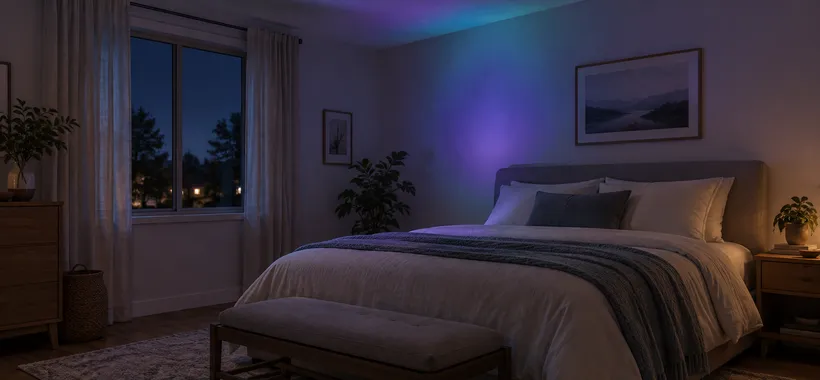
I’ve tried a lot of light-based tools for dream work and this Govee unit stands out because it delivers a large, smooth aurora field plus precise app control. The dual LED beads and lens make a flowing aurora across a big ceiling. You get RGBW color control, 52 scene presets, timers and a sleep mode, plus 18 white-noise tracks and a built-in speaker. That hardware and software combo makes designing gentle pre-REM cues pretty straightforward.
Timing and subtlety matter most for dream exploration. I run short, dim pulses for WBTB and low-power aurora fades for naps. It’s bright enough to be noticed even under a duvet but can be dimmed down to a hypnagogic whisper. Matter/Alexa/Google support and the tilting mount make placement and scheduling painless. Pro tip: aim it into a corner to create a moving doorway of light I use as a conditioned cue.
Who should buy it? Beginners will like the presets and sleep timer for improving recall and building cue associations. Intermediate and advanced users will appreciate the DIY sequences and smart-home schedules for phase-shifting REM. Downsides: some units make a faint motor whir when the stars run, color options for the stars are limited, and no power adapter is included. It needs low ambient light and a bit of placement testing.
Long-term I found it reliably increased hypnagogic noticing when paired with a journal and reality checks. It’s not a silver bullet, but as a flexible, programmable projector you can actually build into a dream exploration routine, it’s one of the more usable options I’ve tested.
Rossetta 3D Projector
I judge tools by how they perform in real routines, not by flashy specs. Out of the box this Rossetta unit is simple and surprisingly flexible. The 60 dynamic 3D scenes and built-in soundscapes give you lots of gentle, repeating visuals that work well as hypnagogic cues. The brightness and focus wheel let you dial things down so you don’t wake up, and the 30-minute timer plus remote make WBTB or short naps easy without stumbling for the controls.
What makes it useful for dreamwork is the audiovisual pairing. The Bluetooth speaker or matched soundtracks add a gentle rhythm that helps anchor attention as you drift. The 220-degree tilt and projection distance let you aim for the ceiling or a clean white wall for stable imagery. I often used ocean and cosmic themes during late-night WBTB sessions. The moving patterns increased hypnagogic flashes and made reality checks feel more natural when I slipped back into sleep.
Who should get it? Beginners will like the presets, calm landscapes, and easy controls for building recall and hypnagogic awareness. Intermediate and advanced practitioners will value fine control over brightness and angle for precise pre-REM priming. Downsides: not the brightest projector on the market, some scenes loop in ways that feel repetitive, and it performs best in a dark, neutral-colored room. If you need high lumen output or frequent scene updates, this model has limits.
Practical nightly tip: use low brightness, pick a slow-moving theme, and the 30-minute timer for a WBTB cycle. Pair the projector with a short journaling session and a couple of reality checks as the images slow. Over months I noticed steadier recall and more frequent aware entries. If you want a dependable, user-friendly tool to prime hypnagogic states, this one earns a try.
Induction Masks That Nudge Lucidity Without Waking You
Masks that combine true blackout with timed cues are my go-to when I need precise signaling without losing sleep continuity. A good induction mask should block stray light, be lightweight, fit side sleepers, have washable parts, and controls you can hit while drowsy. If a mask claims REM detection or motion sensing, look for solid algorithms and firmware updates. There’s a trade-off between advanced sensing and simple, predictable programs. Often the cleanest solution is a manual schedule you can trust during WBTB. Below I compare comfort, cue timing, and how well each mask helps you translate a pre-sleep nudge into a sustained aware dream.
Joseche Sleep Headphones
After years of chasing aware dreams, I appreciate tools that simplify the drift into hypnagogia. This Joseche mask pairs full blackout with thin, flat Bluetooth speakers so you can run guided meditations, binaural beats, or a WBTB reminder without bungling earbuds. The fit is soft and breathable, and the speakers are flat enough to sleep on your side. That mix of darkness and easy audio is surprisingly effective for nudging awareness during the pre-REM moment.
What makes it stand out for dream exploration is practicality. It blocks light well, the fabric module is removable for washing, and the Bluetooth connection plays cleanly with timers and sleep apps. I use it for short naps and WBTB sessions, usually a 20-30 minute induction track while drifting back to sleep. The built-in mic and movable speakers are handy if you need to answer a call or tweak placement. Controls can be a little touchy by feel, and battery life varies between units, so expect to test yours and keep a charger nearby.
Best for beginners and intermediates who want a low-friction way to combine auditory induction with a reliable blackout. Advanced users wanting precise timed light or electrical stimulation will want dedicated REM-priming gear, but for habit-building, recall work, and nightly audio cues this mask is strong and affordable. Tips from my experience: reposition the speakers for balance, keep volume gentle so the audio becomes background, and remove the module before washing.
Pros: full blackout, comfortable, washable module, Bluetooth convenience, flat speakers for side sleeping. Cons: controls can be awkward to find by feel, battery life varies, and it may run warm for some sleepers.
Dream Recovery Pro Mask
If you track REM timing and use WBTB, this mask quickly becomes a reliable part of the kit. It delivers true blackout, which matters more than most people expect. Complete darkness helps your brain stay in REM or slip back into it during short returns to bed. The 3D eye cups keep fabric off your eyelids, so you can feel hypnagogic imagery and thin phosphenes without waking from eye pressure. That made the line between “almost aware” and “I’m in” noticeably easier to cross for me.
The materials and fit suit side sleepers. The bamboo cool-tech silk stays breathable and keeps skin from overheating. The contoured nose cushion seals light effectively, and the interior shape holds its form even if you roll around. Expect to hand wash it to preserve the fabric. I also liked that it stays put after a short alarm during WBTB, which meant fewer interrupted attempts and better cumulative recall over weeks.
Who should pick this up? Beginners will appreciate removing stray light and eye pressure-two low-hanging obstacles to awareness. Intermediate and advanced practitioners will value the eye cups and reliable blackout that let you catch hypnagogic cues and sharpen intention without extra gadgets. It won’t do the dreaming for you, but it raises the baseline conditions for success, which is often the most useful thing.
Pros: total blackout, deep eye cups, cooling silk, stays put for side sleepers and travel. Cons: Velcro strap can catch long hair, nose seal feels fiddly for some faces, and it needs hand washing to last.
Sleep Entrainment Lights to Prime Your REM Window
Long-term progress in dream exploration often comes down to shifting REM timing, and entrainment lights are built for that. Use them to nudge your circadian rhythm, simulate dawn and dusk, or set precise WBTB windows so deeper REM shows up later in the night. When you evaluate these lights, pay attention to spectrum options (bright white for morning stimulation versus warm or narrowband red for evening), maximum lux for morning use, programmable schedules, and whether you prefer manual or app-based controls. Gentle sunrise/sunset profiles and timers are essential to avoid jolting sleep while producing measurable phase shifts. I focus on devices that are practical every day, fit into WBTB workflows, and actually move REM placement over weeks of disciplined use.
Philips SmartSleep Wake-up Light
I’ve used the Philips SmartSleep on and off for years as part of a dream-exploration toolkit. It’s one of the easiest non-invasive ways to bias nights toward awareness. The sunrise and sunset simulations are smooth and configurable across 20 brightness levels, so I use the sunset program to wind down and the sunrise ramp to time planned WBTB sessions or early-morning REM. The gradual reddening at low levels helps me fall toward hypnagogia more reliably, and the bright dawn cue can nudge morning awareness without the shock of a loud alarm. The built-in sounds and FM are handy if you want an auditory anchor, though for dream techniques I mostly rely on the light plus short wake windows to re-enter REM with intention.
If you’re new to timing and sleep hygiene this is a gentle, low-tech place to start. More experienced practitioners will like that it’s predictable and durable, so you can build routines like scheduled WBTB wakes or timed naps. Pros: smooth sunrise/sunset simulation, wide brightness range, reliable for daily routines, and it doubles as a nightstand lamp. Cons: small buttons can be fiddly when half-awake, the speaker and sounds vary in quality, and a minority of users report hardware failures after several years. Practical tip: place it in sight but don’t cover it. If you want light-based cues to prime hypnagogic awareness and improve recall, this one keeps popping up on my recommendation list.
COMSYNC Sleep Light
I’ve tested many lights and this COMSYNC lamp stands out for versatility. It includes a true 670nm red channel for evening wind-down and a strong 10,000 lux white mode for daytime entrainment, so you get two tools in one. Use the red tone to preserve melatonin and quiet the pre-sleep mind. Use the bright, full-spectrum mode earlier in the day to shift circadian timing and keep REM windows more predictable.
Control is the real strength. Five color temperatures, five brightness steps, memory recall, and four timers let you set short pre-REM cues or longer WBTB sessions without fumbling. I place mine across the room, set a short red cue about 10 minutes before a planned WBTB nap, and it nudges hypnagogia without startling me awake. Timed light cues like that sharpen conscious access as you slip into REM. Over months I noticed steadier recall and more frequent spontaneous aware moments.
Who should buy it? Beginners will appreciate the red night-light and simple timers for easier WBTB initiation. Intermediate and advanced practitioners can use the timers and bright-day mode for phase-shifting and targeted REM priming. It’s compact and reliable, though the touch buttons on the back are less tactile than physical switches.
Pros: versatile dual-spectrum modes, useful timers, remote control, memory recall. Cons: small footprint if you want broad-room illumination, touch buttons take getting used to.
The Bottom Line
After months of testing hypnagogic projectors, induction masks, and entrainment lights with real WBTB and nap routines, one thing is clear. Gentle, well-timed visual cues work when they’re subtle, repeatable, and paired with good timing and clear intent. The Rossetta Mini 3D Galaxy Projector and the Govee Star Projector both deliver that gentle priming in different ways: Rossetta with compact themed scenes and simple timers, Govee with a broad aurora field and tight app control. Masks like the Joseche sleep headphones and the Dream Recovery Pro solve a different problem by preserving blackout and letting audio or minimal phosphenes carry your intention into sleep. For shifting REM windows over weeks, entrainment lights such as the Philips SmartSleep and the COMSYNC are the reliable pieces that nudge circadian timing without jolting nights apart.
None of these are magic by themselves. Expect to tweak placement, brightness, and schedule, and combine the device with journaling, reality checks, and a short WBTB habit. If you’re starting out, pick something forgiving and high-utility: the Govee Star Projector or a versatile sleep mask (Joseche), and add a sunrise/sunset routine with a SmartSleep or COMSYNC lamp. That setup teaches timing, improves recall, and builds the habit scaffold you need. Intermediate users will get value from the Rossetta for precise pre-REM priming and the COMSYNC for dual-mode entrainment. Advanced practitioners who track REM tightly will like the Dream Recovery Pro Mask for uncompromised blackout and the Rossetta or Govee for highly tuned hypnagogic sequences.
One practical tip I still repeat: give any new setup at least 10 to 14 nights before deciding it’s good or bad. Tweak one variable at a time, journal every morning, and track your aware entries. Small wins add up. I once used the Rossetta in a cheap motel room aimed at a neutral corner and hit a clean aware nap, which reminded me that placement and low contrast matter as much as spec sheets. Be honest with your nights, note the little improvements, and trade equipment shopping for a month of steady practice.
Ready to try something specific? Tell me your sleep schedule and goals and I’ll suggest a four-week starter protocol with exact timings and settings to test.