Lucid Dream Rehearsal for Athletes: A Sleep-First Practice Pipeline
How to build a repeatable lucid dream rehearsal practice: recall and intention first, MILD as the main induction method, short wake-back-to-bed awakenings, and one waking drill the same day. Honest about limited transfer evidence, with supplements optional.

On this page
Lucid dream rehearsal is the practice of picking one narrow skill, becoming lucid on purpose, and running a few deliberate reps of that skill inside the dream. The version that holds up over weeks is smaller than most people expect: build dream recall and a single clear intention first, use MILD as your main induction technique, keep any wake-back-to-bed awakening short, and turn whatever you notice into one short waking drill the same day.
This guide walks through that pipeline in order, and it is honest about the limits. Transfer evidence from dream practice is limited and inconsistent, no step guarantees lucidity, and sleep comes first throughout. If you want the whole assignment tonight, here it is: write down one line about a dream and set a single rehearsal intention before bed. Everything else builds on that.
Key takeaways
- Build dream recall and a single clear intention before adding any induction technique.
- Return to sleep quickly after a MILD attempt, a skill that predicts success more than long wake time.
- Rehearse one narrow micro-skill per lucid dream, then run a short waking drill the same day.
- Keep sleep first. Skip fragmented nights and treat supplements as optional, with a provider's sign-off.
What is lucid dream rehearsal, and how strong is the evidence?
Start with why the idea is plausible at all. Mental practice is a standard part of athlete training because vividly imagined movement engages much of the same planning machinery as real movement. Coaches already use it for reasons that predate any dream research. A lucid dream adds something ordinary visualization cannot: you are inside the environment, with some voluntary control, so you can run a rep, notice where it went wrong, and correct it within the same attempt.
The confidence argument is simpler than any brain claim, and it is worth stating as the reasoning it is. Practicing a movement where nothing is at stake lets you attempt, adjust, and attempt again without cost. If a dream supplies that low-stakes environment, you get extra repetitions of the attempt itself, including the feeling of executing under control. That is an argument, not a measurement. It establishes nothing about how much of it carries into a court, a field, or a stage, and nothing about anyone else's results.
So how strong is the evidence? Direct evidence that rehearsing in lucid dreams improves waking physical performance is limited, and the effects reported so far are weak and inconsistent. The fair reading is that dream rehearsal is mental practice in an unusual setting, not a replacement for physical reps. Two more boundaries are worth carrying into the rest of this guide. Lucid dreaming appears to involve a brain state that is neurologically distinct from ordinary REM sleep, and the long-term effects of deliberately cultivating lucid dreams are still an open question. Neither settles anything about outcomes, which is exactly why this pipeline ends with a log rather than a promise.
What do you build first so any of this can work?
The foundation is recall, because a dream you cannot remember is a rep you cannot use. Keep a notebook and pen by the bed, and when you wake from any dream, stay still for a moment, then write one line about it before you check your phone. A fragment counts. "Field, a ball, someone shouting" is a complete entry. Do this nightly before adding anything else, since the whole pipeline runs on material you can actually remember.

The main induction technique is MILD, the mnemonic induction of lucid dreams, and it earns that position: among cognitive induction techniques, it has the strongest supporting evidence to date. In the International Lucid Dream Induction Study, roughly 13 to 20 percent of nights were lucid after a week of practice, against a lower baseline at the start. Those were self-report logbooks from motivated volunteers, and study-population rates are not predictions for your own nights. The same studies found that successful induction showed no adverse effect on self-reported sleep quality, and that it worked for people with and without prior lucid-dreaming experience.
The MILD routine runs during a brief awakening at night:
- After waking from a dream, stay still and write the one-line note.
- Lie back down and visualize returning to the dream, this time seeing your hands or running a reality check.
- Repeat a short phrase such as "Next time I'm dreaming, I will know I'm dreaming," and let it carry some feeling rather than reciting it flatly.
- Fall asleep holding the intention gently in mind.
Reality checks come next, and their real job is narrower than their reputation. A reality check is a cheap habit for questioning your state and for confirming, in the moment, that you are dreaming. In the largest field studies, reality testing on its own was ineffective over short practice windows, and it added no measurable benefit on top of MILD and wake-back-to-bed. So keep one or two checks, not a dozen, and put the bulk of your daytime effort into recall and MILD.
To pick a check, favor one that gives clearly different feedback in a dream. Looking at your hands and reading a short line of text are the common choices. Tie each check to a cue you already have, like sitting down at your desk or walking through a doorway, and before each check say what you expect to see, then look. What you are training is the habit of actually checking instead of assuming. When the habit shows up inside a dream, hands with the wrong number of fingers or text that warps on a second read become the answer to the question you have been asking all day.
How do you run the night itself?
Here is the part most descriptions of wake-back-to-bed get backwards.
The hard part of the night is not staying awake. It is getting back to sleep fast enough.
In a large field study of the technique, lucid dreams were reported about 86 percent more often on nights when practitioners fell back asleep within five minutes of finishing MILD. A second study found the same direction with a weaker effect at a ten-minute cutoff, so the exact number is not settled, but both point the same way. These are self-reported timings, so treat them as calibration rather than a mechanism. The practical version is a short, boring awakening and a fast return, not a long vigil.
A workable night looks like this:
- Set an alarm for the last third of the night, commonly after roughly 4.5 to 5 hours of sleep. Individual REM timing varies, and these are the windows the studies used, not prescriptions.
- Keep the awakening dull and the lights low. Notebook, a sip of water, and no phone, because content at 3 a.m. is how a short awakening becomes an hour. The pen lives on the nightstand for exactly this reason, because hunting for one in the dark finishes waking you up.
- Run the MILD routine from the previous section while you are up.
- Go back to bed aiming to be asleep within about ten minutes. Awakenings from a few minutes up to about half an hour all fall in the range the studies used, and going longer showed no added benefit.
Then read the outcome. If you fell back asleep quickly and remember a dream or a fragment, nothing needs to change. If you lay awake too long to fall back asleep, skip the alarm night and run the MILD routine at your next natural waking instead. And if you slept badly, have an early start, or are already short on sleep, skip the night entirely. One lucid attempt is never worth a wrecked training day.
A note for readers who go further. WILD, or wake-initiated lucid dreaming, attempts to enter a dream directly from waking rather than after falling back asleep. It can come with sleep paralysis and hypnagogic sensations, the odd noises, floating feelings, and brief inability to move that can occur while you cross into sleep. They pass, and knowing that beforehand is the difference between an interesting experience and an alarming one. Learn what to expect before attempting it.
Once lucid, what do you rehearse and how?
The scarce resource is the dream itself, which rarely lasts long, so decide what you are rehearsing before you go to sleep. The bridge from the foundation routine is the intention line. Alongside your MILD phrase, set one rehearsal intention: "Tonight I will rehearse my free-throw approach." One skill, not a whole routine.
Take a free throw broken into three observable steps: foot placement, the dip of the ball, the release. When you notice you are dreaming, the first job is staying in the dream, and excitement is what usually ends it. Look at your hands, touch something with texture, and name objects out loud until the scene feels solid.
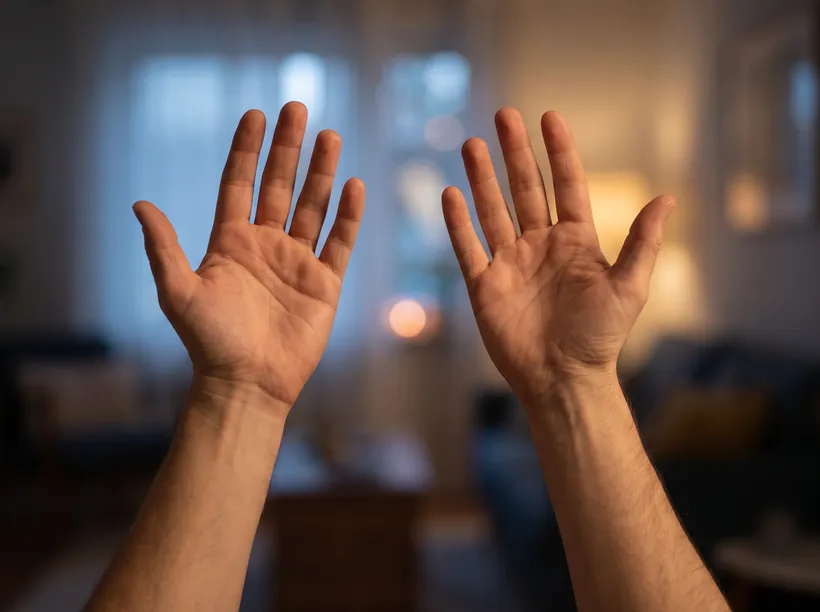
Then run the movement at about a quarter speed and pay attention to exact sensations: where the weight sits, where the ball leaves the hand. Repeat one micro-action ten times, fixing one small detail each rep, and only speed up once the corrections feel consistent. For reactive sports, add a decision drill. Have the dream supply a defender or a sound, then force yourself to pick one of three responses quickly, because deciding under invented pressure is its own skill. Give the movement a short verbal tag, something like "soft hands." You will reuse that exact word in waking training.
Dream feedback can feel different from waking sensation. A movement that felt clean in the dream may look off on video, and a flaw you noticed while awake may never appear at all. Treat the dream as a place to run deliberate reps and notice things, not as an exact copy of the physical movement, and let the morning routine decide which observations survive. These drills are suggestions to try and log, not validated protocols.
When you are done, or when lucidity starts to fade, resist the urge to sprint the scene somewhere interesting. Hold still, move one finger, and open your eyes gently. The dream ends either way, and the note you write next is the part that survives.
How do you turn a dream into waking practice?
The morning capture takes under five minutes, and it is where dream work becomes training. Stay still for a moment and replay the sequence in your mind. Then write a one-line note, and underneath it two takeaways: one technical, one mental. "Lower back angle on takeoff" and "stay calm at the cue" are the shape. Two takeaways, or none if the dream gave you nothing, and a night with no usable dream is a normal night in this practice rather than a failed one.
Then convert one takeaway into a short drill the same day, while the note is fresh. That timing is practitioner guidance rather than a research-backed window, and one technical target per session is plenty. If timing was the issue in the dream, it becomes a five-minute cadence drill at half speed, nothing more. If a posture felt better in the dream, it becomes ten slow reps, filmed if you can, so the dream impression has something to be compared against. Reuse the dream's cue word at the matching moment in training. If your tag was "soft hands," that is the word at step-in or pre-shot.
Dream feedback is rarely literal, so translate impressions into something measurable: a time, a count, a distance, a filmed rep. "The dream felt good" is not a drill. "Ten slow reps at half speed with the back angle from the note" is.
How do you track progress and run a fair four-week test?
The tracking system only survives a bad week if it is small, so the whole requirement is one line per night.
| Field | What goes in it |
|---|---|
| Date | the night in question |
| Lucid | yes or no |
| Recall | 0 to 5, where 0 is no recall |
| Rehearsal target | the micro-skill you intended, and whether you got to it |
| Waking transfer note | the takeaway you carried into training |
| Confidence | 0 to 5 |
Once a week, read the trend rather than any single night: how many nights you were lucid, how many nights you rehearsed a targeted skill, and one practical transfer metric tied to your sport. A ten-shot accuracy set is the classic example, and any small, repeatable measure works.
The fair test runs four weeks. Week 1, track baseline nights and waking performance with no new practice. Weeks 2 and 3, add the practice and change nothing else. Week 4, compare and decide. One variable at a time, or the data tells you nothing.
Then apply the rules. Keep the practice if the transfer metric and the log both move in the right direction. Adjust if one moves and the other does not. Drop it if four fair weeks produce nothing, and treat that as a result rather than a failure. A dream-sourced correction that never shows up in training is a hypothesis to refine, not evidence you are doing it wrong. All of it is personal data. It tells you whether the practice is worth your nights, and it proves nothing about anyone else or about the technique in general.
What protects your sleep, and what is the honest deal with supplements?
Sleep is the thing the whole pipeline borrows against, so the stop conditions come first. Do not chronically fragment your sleep to chase lucidity, and treat wake-back-to-bed as an occasional tool rather than a nightly habit. Nights with short sleep, an early start, or a big event tomorrow are automatic skips. Scale back if you notice persistent daytime sleepiness, anxiety, or mood changes, and talk to a healthcare provider before any intensive technique if you have a sleep disorder, psychiatric concerns, or take medications.
Then the supplements, where the honest answer is short. For the pipeline in this guide, they are unnecessary, and nothing here depends on them.
One substance does have a controlled trial behind it for lucid dream frequency. In a double-blind, placebo-controlled trial, participants who took galantamine during a structured wake-back-to-bed protocol reported more lucid dreams than the placebo group. The trial's own scope is the caution. It involved 121 adults with high dream recall at a training retreat, using a combined protocol of sleep interruption, MILD and light cues, so the substance's own effect cannot be separated from the procedure. About 12 percent of participants on the active dose reported mild side effects, including gastrointestinal upset, trouble returning to sleep and next-day fatigue. Galantamine is a medication with real interactions, which is why a healthcare provider comes before it, not after.
Vitamin B6 shows up in discussions of dream recall rather than lucidity. One replication study reported that participants recalled more dream content, and more vivid content, on B6 before bed than on placebo. If that holds for you, it supports the note-taking half of this pipeline, not the induction half. The safety boundary is real. High amounts of B6 from supplements taken for a year or longer can cause severe nerve damage, though the symptoms usually stop when supplementation stops, and the adult daily upper limit is 100 mg from all sources. That limit describes self-directed supplementation, not medical use under a doctor's care, and the NIH consumer fact sheet on vitamin B6 is the maintained reference for limits and interactions.
The next decision is small. Protect the return to sleep, because that is the skill the evidence actually points at. Let the log decide, after four fair weeks, whether the practice keeps a place in your training. And where the notes are useful, put them in front of a coach, because outside eyes turn dream impressions into technique changes faster than another month of attempts.