Co-Create a Shared Dream World: Practical Techniques for Couples
Published on December 5, 2025
Here is what most people miss about sharing dreams with a partner: it is not primarily a parlor trick. If you treat it like a party stunt, you'll miss the deeper value. Shared lucid dreaming, when practiced with curiosity and discipline, can become a way to deepen communication, map shared imagery, and co-create nightly experiences that may feed your waking relationship. If you already keep a dream journal, do reality checks, and work toward lucidity, communal dreaming is a natural extension of those habits. The difference is that it prizes consistency, mutual intention, and careful recording.
Below you'll find practical, evidence-aware guidance for turning intentional nightly adventures into something you can repeat and refine. I’ll walk you through why shared dreaming matters for couples, how to synchronize and agree on plans before sleep, induction techniques you can adapt together (MILD, WBTB, WILD, reality testing) that research and many practitioners suggest may help, and how to design and stabilize dream spaces so a meeting feels real and sticky. I’ll also give troubleshooting tips, ethical considerations, and next steps rooted in journaling and pattern work.
Expect a mix of rituals, lucid-dream techniques that many practitioners and some studies point to, and journaling strategies for building shared imagery over time. People vary a lot. Some couples hit reliable shared scenes quickly; others take months of disciplined practice. Throughout I’ll emphasize sleep health, consent, and safety, and point out where the science is still catching up. Bring your journals and be ready to plan your first shared dream date.
Why Shared Dreaming Matters for Couples
Most lucid-dreaming advice is about solo practice. Here’s a different take: sharing dreams can amplify everything that makes solo lucid dreaming useful-better recall, stronger reality checks, sharper pattern recognition-while adding a social feedback loop. When two people intentionally try to meet in dreams, they may end up sending similar signals to their dreaming systems. Record those signals in journals and compare them, and you’ll start to see overlapping symbols and triggers. Those overlaps create a shared vocabulary of images that some couples find helps strengthen trust and empathy in waking life.
Relationships run on shared narratives. A jointly built dream place is a symbolic playground where partners can experiment with communication, rehearse tricky conversations in low-stakes ways, and experience one another in strange but revealing contexts. Research on lucid dreaming and REM sleep suggests vivid dreaming and lucidity are more likely during REM cycles later in the night, and some studies have found increased activity in frontal brain regions (including parts of the prefrontal cortex) during lucid episodes - though research is ongoing. Studies of genuinely shared dreams are limited and often anecdotal, but the practices that support lucidity-dream journaling, reality checks, intention setting-are supported by both research and practitioner reports. Apply them together and you may create fertile ground for recurrent, co-created dream experiences. It takes patience, consistency, and meticulous note-keeping.
Why shared dreaming matters
This is more than a novelty. For couples who already track their dreams and do reality checks, intentional shared dreaming can become a discipline that may help tighten communication and build mutual understanding. I’ve watched patterns emerge when partners log and compare nightly imagery: shared symbols, recurring locations, trigger moments you can deliberately cultivate. Those patterns may make lucidity more likely and make the experience feel meaningful rather than random.
Nighttime meetings can provide a relatively low-stakes way to explore emotions, practice conversations, and try out shared imagery that might influence waking life. REM sleep occurs in roughly 90-minute cycles and the REM periods often lengthen toward morning, though cycles vary between individuals, so plan your practice with that in mind. Results vary, but steady journaling and synchronized intentions may improve the odds of shared encounters.
How journaling makes shared dreams repeatable
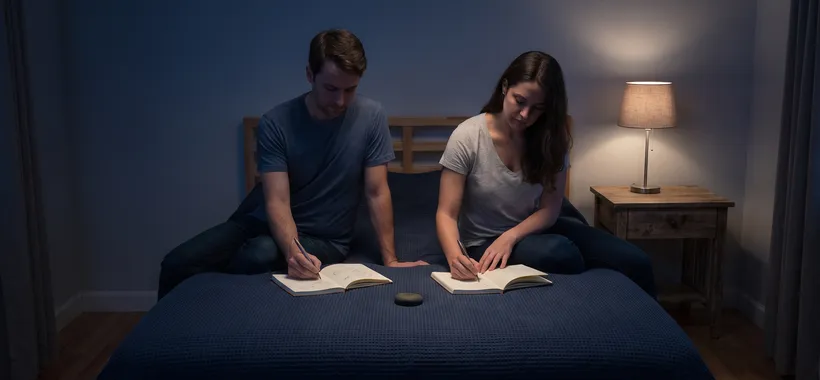
Treat your dream journals like a shared research notebook. Each morning, both partners write down every scrap they remember. Compare entries soon after waking and highlight overlaps: a bridge, a red scarf, the same strange room. Label those as "shared dream signs" and emphasize them during pre-sleep planning.
A simple template goes a long way: date, wake time, dominant emotion, standout sensory details, and a shared-sign checklist. That discipline surfaces micro-patterns-time of night, triggers, pre-sleep thoughts-that may help you induce lucidity together. My favorite move is to mark any symbol that showed up for both of us that week and prioritize it in the next night's visualization.
Practical steps to get started
- Agree on an intention before bed. Say it out loud or write it down. Be specific. "Meet in the café by the river" beats "see each other."
- Keep simultaneous journals. Write within 30 minutes of waking so details don't evaporate, then compare.
- Build a shared dream-sign list. Start with three reliable symbols and focus on them for two weeks.
- Practice synchronized reality checks during the day. Make the same gesture or use the same phrase to strengthen the association.
- Try coordinated MILD or WBTB. For example, both partners wake after 4.5 or 6 hours, briefly discuss the intention, then return to sleep. WBTB may help some people, but don’t overuse it. Protect sleep quality and check with a healthcare provider if you have sleep issues.
Shared dreaming is a practice. Consistency, curiosity, and careful recording turn lucky coincidences into repeatable, meaningful experiences.
Pre-Sleep Synchronization and Agreements That Work
Intentional shared dreaming starts long before lights-out. Pre-sleep synchronization is about aligning schedules, sleep architecture, and intention. Practically, that can mean planning a shared WBTB window, agreeing on which REM window to aim for, and choosing a simple, repeatable meeting spot and cue (for example, a red bench or a particular song). REM cycles are approximately 90 minutes and usually lengthen toward morning, but everyone’s sleep is different and cycles vary between individuals. Keep sleep health in mind and avoid constant disruptions.
Agreements should also cover ethical and interpersonal ground rules. Decide ahead of time what you’ll do if one partner has an upsetting dream or learns something sensitive. Pick a safe word for waking, set rules about what you’ll report in the morning, and decide how to debrief. Writing a short "dream contract" and keeping it with your journals can be surprisingly calming. Finally, create a simple pre-sleep ritual both of you repeat: a shared intention statement, a quick reality-check rehearsal, and a five-minute review of recent dream signs. That ritual primes memory and signals that tonight is a planned, cooperative experiment.
Why pre-sleep synchronization matters
A clear, shared plan before bed turns coincidence into an experiment you can repeat. When both partners set the same intention, focus on the same cues, and follow a small ritual, similar imagery is more likely to crop up in each person’s REM cycles. It’s not guaranteed, but it creates converging signals your dreaming systems may pick up. Journaling consistently is a big part of making this work.
Practical synchronization steps you can use tonight
- Pick a concrete meeting place. "Meet at the blue bridge by the river" beats "see each other."
- Agree on timing. REM cycles average about 90 minutes but vary between people and tend to get longer toward morning. If you try WBTB, set alarms for the same point (for example after 4.5 or 6 hours of sleep). WBTB may help some people, but keep it occasional. Protect sleep quality and consult a healthcare provider if you have sleep issues.
- Choose 2-3 shared dream signs to emphasize for two weeks. A red scarf, a spiral staircase, or a café clock are all fine. Focus your journaling and pre-sleep visualization on those signs.
- Create a short, repeatable intention phrase. Say it together or write it down. Keep it concrete: "Tonight we meet at the café by the river and look for the red umbrella."
Design a simple pre-sleep ritual
Ritual builds association. Spend 3-5 minutes together before lights-out. Sit quietly, close your eyes, and each describe the meeting place with sensory detail. Hold a small object if you want; a tactile anchor helps memory. Some couples touch the same spot on their wrist as a daytime and in-dream reality-check cue. These small actions link waking intention with dreaming content.
After waking: compare quickly and kindly
Write in your journals within 30 minutes of waking, then share entries. Look for overlapping motifs and note time of night and any sleep interruptions. Treat your journals like research logs. Over weeks patterns will emerge and inform your next pre-sleep choices. Be gentle when comparing; dreams can feel private, so ask curious questions rather than jumping to interpretation.
Safety, consent, and boundaries
Always prioritize consent. Agree in advance what topics are off-limits, how to handle intense emotions, and whether to discuss the dream immediately or after some reflection. Protect sleep health. Techniques like WILD and WBTB may help some people but can disrupt sleep if misused. If you have a sleep disorder, check with a professional. Keep expectations realistic and enjoy the process of building shared imagery.
Induction Techniques Couples Can Use Together
There are several well-documented techniques that research and practice have found may help increase the likelihood of lucid dreaming. Mnemonic Induction of Lucid Dreams (MILD) involves setting a clear intention as you fall asleep and using a memory cue to recognize a dream sign. Wake Back to Bed (WBTB) often involves waking after several hours of sleep and returning to bed with fresh intention. Wake-Initiated Lucid Dreaming (WILD) aims to enter a dream directly from a waking state; for some people it may be effective but it is also associated with hypnagogic imagery and sleep-paralysis sensations and requires caution. Reality checks and steady dream journaling are foundational habits that research suggests can raise lucidity frequency over time. Language matters here: these methods may help, and many people find success through steady practice; individual responses vary.
For couples, synchronization is the real edge. Coordinate a WBTB window, whisper a shared MILD phrase before drifting off, and use the same reality-check triggers. When both partners follow the same induction cycle, the odds of overlap may increase and you build a shared pattern to analyze in your journals. Start conservatively. Keep sleep schedules healthy and track everything so you can refine what works for you both.
Below are practical induction techniques you can try together, with steps, examples, and safety notes.
Pre-sleep rituals and intention setting
Before bed, agree on a short, clear intention. Sit together for three to five minutes, close your eyes, and say a shared phrase out loud, for example, "Tonight I will realize I am dreaming and find you by the blue door." Repeat it three times while visualizing the meeting. Keep the phrasing specific and positive. Do this consistently and you may prime your minds to notice the same cues.
Synchronized WBTB and MILD
Waking after a few hours and going back to sleep may increase REM awareness for some people. Try waking after about 4.5 to 6 hours, stay up 15 to 45 minutes, then do MILD-style intention setting before going back to bed. Coordinate alarms so you both wake within 10 to 15 minutes of each other. Use the awake time to read your journals, whisper the shared phrase, or meditate together for 10 minutes. Many couples say synchronization helps, though individual responses vary.
Shared reality checks and dream cues
Pick one or two reality checks to use during the day and aim to practice them often so they might occur in dreams. Examples: look at a text twice, check a clock, or try pushing a finger through your palm. Choose a memorable shared cue like a red scarf or a phrase. If a symbol keeps showing up in your journals, turn it into a cue. Frequent daytime reality testing may increase the chance you'll perform the same check while dreaming.
Wake-initiated lucid dreams and safety
WILD can work for people who can remain calm while transitioning into sleep, but it is more advanced and requires understanding hypnagogic imagery and sleep-paralysis sensations. Lie still after your WBTB period and observe hypnagogic imagery without panicking if sleep-paralysis sensations appear. Sleep paralysis can be distressing; while it is not physically dangerous for most people, understanding it before attempting WILD is important. If either partner has panic tendencies, a history of sleep disorders, or trauma, avoid WILD and consult a professional.
Dream journaling and pattern analysis
Record dreams immediately on waking, separately, then share summaries. Look for matching symbols, locations, or emotions. Over weeks you may spot reliable "dream signs" that predict lucidity. Track which induction steps preceded lucid nights. Consistent journaling is strongly linked to increased lucid-dream frequency and long-term progress in many practitioners; research suggests it's a helpful practice.
Safety and expectations. Results vary greatly. Don’t sacrifice sleep quality for practice. If you have sleep problems, consult a healthcare provider. Treat this as a shared experiment, not a guaranteed outcome.
Designing and Stabilizing Shared Dream Spaces
Designing a shared dream space means translating waking imagery and joint intention into cues both of you recognize. Start by mining your journals for recurring symbols, places, and sensory details that resonate. Create a simple, consensual scene in waking life: sketch a rough map, pick three anchor objects, and agree on a mood. The aim is recognizability, not cinematic perfection. Simple, concrete anchors make it easier for two minds to converge.
Stabilizing a dream once you’re lucid takes practice. Common stabilizers include focusing on sensory detail (listen carefully, touch textures, smell something), doing small actions like rubbing your hands, and naming objects aloud. For couples, synchronized anchors and a short stabilization ritual may help a shared scene stick. Agree on a brief ritual to perform immediately upon lucidity, such as both partners saying the agreed phrase, touching the chosen anchor, or counting aloud together. Record what works, note the sequence that maintained lucidity, and refine the design over time.
Designing a shared dream space
Start with a simple, vivid image you both can picture easily. A small garden with a red bench. A lighthouse on a calm sea. Keep it low on detail at first; too much complexity can fragment lucidity. Before sleep, spend five minutes describing the space aloud or in the shared dream journal. Agree on one anchor object or symbol like a clock, a red ribbon, or a painted door. That shared cue may raise the odds you’ll both recognize the same environment if lucidity appears.
Make a short pre-sleep plan. Name the place, pick the anchor, and set a basic meeting plan (time estimate or call-and-response phrase). Repeat the phrase a few times, and combine it with MILD-style intention setting. Try it a few nights in a row so the image has time to stick.
Example protocol. One partner wakes about 5-6 hours after sleep for 20-30 minutes (WBTB). Quietly review the shared scene, repeat the meeting phrase, then return to sleep with the intention to meet. WBTB plus MILD has helped many practitioners and research suggests these methods may increase chances of lucidity for some people. Use WBTB sparingly and avoid chronic sleep disruption.
Stabilizing and anchoring once lucid
When you feel lucid, stabilize fast. Excitement often makes the dream dissolve. Slow your breathing, touch something, and name the environment aloud. Rubbing your hands together, pressing your fingers to a surface, or holding the shared anchor object increases sensory detail. Saying an anchor phrase like, "We are here together," can re-center attention.
If the dream gets fuzzy, engage senses one by one. Look closely at texture, listen to distant sounds, taste something offered by your partner. Move slowly; rapid spinning or quick motions can destabilize the dream and wake you. If your partner shows up fuzzy, ask them to speak or make a slow gesture until clarity returns.
A handy trick is an in-dream reality test: one partner touches the anchor while the other checks whether it behaves as expected. Rehearse that test awake so it becomes familiar.
Keep track, analyze, iterate
Record every shared session in a dream journal. Note time of night, lucidity cues, anchor success, emotions, and recurring symbols. Track which anchors held and which phrases helped stabilize lucidity. I recommend a shared log where you both add quick entries and review weekly. Patterns emerge over weeks, and those patterns tell you what to tweak next.
Final safety note: don’t sacrifice sleep quality. WBTB and aggressive attempts should be occasional. If you have sleep problems, consult a healthcare provider. With steady journaling, clear shared design, and gentle stabilization, couples can increase their chances of meaningful, co-created dream experiences.
Troubleshooting Common Problems, Ethical Considerations, and Next Steps
When couples begin this practice, a few roadblocks show up again and again: one partner becomes lucid while the other does not, memories fade on waking, control conflicts pop up in the dream, and sleep suffers from overusing techniques like WBTB. Troubleshooting starts with data. Use your journals and a shared tracking sheet to note the method you used, timing, and dream signs. If one partner rarely gets lucid, concentrate on recall and daytime reality checks. If both are lucid but fail to meet, simplify the plan and strengthen anchors. Limit disruptive practices and never sacrifice restorative sleep for experiments.
Ethics are crucial. Shared dreaming involves psychological intimacy and vulnerability. Get clear consent before attempting shared dreaming. Agree on boundaries around sensitive content and on how much to disclose afterward. If either partner has a sleep disorder, significant mental-health concerns, or experiences distressing sleep, consult a professional before using advanced techniques. Supplements and devices aren’t necessary for lucid dreaming and should be approached cautiously. Consult a healthcare provider before starting any supplement. Research on supplements is limited and ongoing; they are not required for success. Examples to keep in mind: galantamine has limited research for lucid-dream facilitation and is not FDA-approved for that use; it can cause side effects for some people (nausea, gastrointestinal upset, dizziness) and may interact with other medications. Vitamin B6 has been reported by some people to affect dream vividness, but evidence is limited and very high doses carry risks (for example, sensory neuropathy). Choline and other compounds are largely anecdotal for lucid dreaming. Melatonin is a sleep-regulating hormone used to help with sleep timing, not a proven lucid-dream enhancer. Always discuss contraindications and potential interactions with a medical professional before trying supplements.
For next steps: plan small, measurable experiments, keep meticulous journals, and schedule regular debriefs. Over time you can move from simple meetings to richer, co-created landscapes while keeping safety at the center.
Troubleshooting: common roadblocks and fixes
- Poor dream recall: Get back to basics. Keep a notebook and write any fragment immediately on waking, even a single emotion or color. A simple prompt on the first line, like "What happened?" helps.
- Elusive lucidity: Try frequent daytime reality checks (look at your hands, read text twice, question your surroundings). Combine MILD with a gentle WBTB session. Log what you try so you can spot patterns.
- Partners out of sync: Coordinate sleep windows and rituals. Agree on a nightly intention and schedule a morning debrief time. If one partner wakes and the other doesn’t, journal separately then compare notes later.
- Stability issues: Ground yourself. Rub your hands, focus on textures, and name objects aloud. Move slowly to avoid waking yourself.
- Sleep quality drops: Stop intensive protocols and return to normal sleep. Consult a healthcare provider if insomnia, sleep apnea, or other disorders are in play.
Ethics: consent, safety, and emotional care
Shared dreaming needs clear consent, ongoing communication, and emotional responsibility. Discuss boundaries before you start. Pick sensitive topics to avoid and decide on an exit cue if someone feels uncomfortable in a dream.
Respect privacy and interpretation. Dreams can surface deeply personal material. Don’t pressure a partner to disclose details they want to keep private. Avoid trying to manipulate another person’s dream content or using lucid dreams to rehearse arguments or control behavior.
If trauma is present, be cautious. If you or your partner has PTSD or significant trauma, consult a mental-health professional first. Vivid dreaming can sometimes intensify emotional material.
If you consider supplements, remember they are not necessary. Talk with a healthcare provider first. Some supplements like galantamine or vitamin B6 have limited evidence and possible side effects. Prioritize sleep health over experimental shortcuts.
Next steps: practical actions and tracking
Make a simple weekly plan. For example:
- Five minutes of shared intention each night. Phrase it specifically, such as "Tonight we will meet by the river and remain aware."
- Daily dream journaling for both partners, with timestamps.
- Weekly review to map recurring symbols, emotions, and locations. Look for patterns that precede lucidity.
- One experimental induction per week (MILD or a short WBTB), logged and rated.
Use a tracking template: date, sleep times, induction method, dream fragments, lucidity level, stabilization score, emotional tone. Over months you’ll see which rituals and symbols reliably lead to shared lucidity for you. Consistency, patience, and careful record keeping turn curiosity into craft.
Where to Go From Here
Shared lucid dreaming is not a party trick. It’s a disciplined, collaborative practice that rewards careful journaling and steady attention. The core moves are simple: keep simultaneous dream journals, practice reality checks, agree on clear pre-sleep intentions, and use evidence-aware induction methods like MILD and WBTB that research and practitioners suggest may help some people. Design a small repeatable scene with one or two anchor objects, practice stabilization techniques like touching textures or naming the environment, and remember that REM cycles occur in roughly 90-minute patterns and often lengthen toward morning.
My strongest, practical recommendations: make journaling nonnegotiable, compare entries within about 30 minutes of waking to catch fragile details, use synchronized reality checks during the day so they stand a better chance of appearing in dreams, coordinate simple MILD-style phrases together before sleep, and use WBTB sparingly to target later REM windows. If you try WILD, be cautious and know that sleep-paralysis sensations can occur. Results vary, and careful record-keeping gives you the best chance of progress.
Try this short plan this week. Tonight spend five minutes together naming a specific meeting place and one anchor object. Pick three shared dream signs to focus on for two weeks. If you want to experiment with WBTB, set a single alarm for about 4.5 or 6 hours, stay awake 15 to 30 minutes, review the shared scene, then return to sleep with a MILD-style phrase. Keep a simple tracking template: date, sleep times, induction method, dream fragments, lucidity level, stabilization score, and emotional tone. Do one focused experiment per week and review your shared log together.
Keep safety and ethics front and center. Get clear consent, set boundaries and an exit cue, and be gentle with emotionally charged material. If you have insomnia, sleep apnea, PTSD, or other sleep or mental-health concerns, consult a healthcare provider before trying intensive techniques. If you’re curious about supplements, talk to a professional first.
Now do one small thing: grab your journals, agree on a simple meeting place, and try tonight’s five-minute ritual. Log whatever you remember, even a scrap, and schedule a ten-minute weekly review to map patterns. With patience, curiosity, and consistent recording you can turn occasional coincidences into repeatable, meaningful shared dream experiences.